
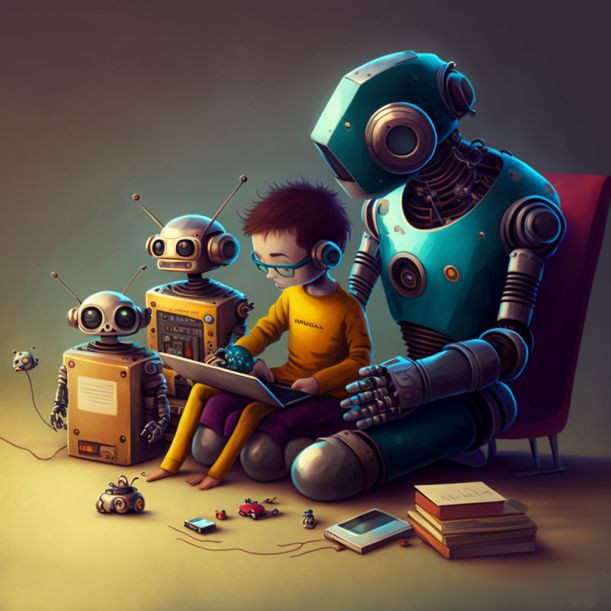
Artificial intelligence is not a threat to humanity. It can be a great boon. – Masayoshi Son
In recent years, the rapid advancement of Artificial Intelligence (AI) has led to the development of various chatbots that are revolutionizing the way we interact with technology. Among these, three prominent AI chat open assistant chatbots have gained significant attention: ChatGPT, Bard AI, and Bing AI. In this blog, we’ll delve into the details of each of these chatbots and highlight their differences.
ChatGPT: Power of Conversational AI
ChatGPT, developed by OpenAI, is one of the pioneering models in the field of conversational AI. It is based on the GPT (Generative Pre-trained Transformer) architecture, designed to generate human-like text responses. ChatGPT has been fine-tuned specifically for chat-style interactions, making it a versatile tool for tasks like answering questions, offering recommendations, and engaging in casual conversations.

The model’s ability to understand context and generate coherent responses has led to its widespread adoption in various applications, from customer support to content creation. With its user-friendly API, developers can integrate ChatGPT into their own platforms, enhancing the user experience through natural and dynamic interactions.
Bard AI: Elevating Creative Conversations
Bard AI, developed by OpenAI as well, is a sibling model to ChatGPT but with a distinct focus on creative writing and storytelling. Bard AI is designed to generate imaginative and artistic pieces of text, making it an excellent companion for writers seeking inspiration, story prompts, and unconventional narratives.
Bard AI’s underlying architecture enables it to understand prompts related to story elements, characters, and settings, and respond with elaborative and imaginative passages. It’s a testament to how AI can augment the creative process by offering fresh perspectives and inventive ideas.
Bing AI: Microsoft’s Conversational Assistant
Bing AI, developed by Microsoft, is another player in the AI chat open assistant chatbot arena. It’s part of Microsoft’s broader strategy to enhance user interactions and information retrieval through AI-driven conversation. Bing AI leverages its search engine capabilities to provide context-aware responses, offer recommendations, and assist users in finding relevant information quickly.

One of Bing AI’s key differentiators is its integration with Microsoft’s ecosystem, allowing seamless interactions with other Microsoft products and services. This integration gives Bing AI an edge in scenarios where users are deeply embedded in the Microsoft ecosystem.
Differences and Distinctive Features
While ChatGPT, Bard AI, and Bing AI all fall under the category of AI chat open assistant chatbots, they each offer unique features and capabilities:
– ChatGPT stands out for its versatile conversational abilities and adaptability to various tasks, making it suitable for a wide range of applications.
– Bard AI focuses on nurturing creativity and providing writers with an AI-powered muse to spark imaginative content.
– Bing AI excels in utilizing its search engine capabilities to offer contextualized responses and facilitate information retrieval, particularly for users within the Microsoft ecosystem.
“Machine intelligence is the last invention that humanity will ever need to make.”
Conclusion
The landscape of AI chat open assistant chatbots is rapidly evolving, with ChatGPT, Bard AI, and Bing AI each contributing distinctive strengths. As technology advances, these chatbots are reshaping how we interact with AI, whether for engaging conversations, creative exploration, or efficient information retrieval. Their combined impact showcases the remarkable potential of AI to enhance human interactions and experiences across various domains.
Thanks for visiting on our page…

 TechBot